
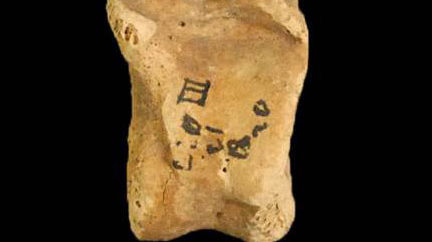
The project ‘Following in the footsteps of transhumance in antiquity: study of livestock farming practices and cultural landscapes in the eastern Pyrenees through archaeozoology (Institut Català d’Arqueologia Clàssica) investigates the livestock farming that was practiced in mountain areas in pre-Roman and Roman times (5th to 3rd centuries AD) and the local, regional or interregional character…
The ancient city of Utica (Tunisia) was the oldest Phoenician foundation in Africa according to ancient Greek and Latin texts. After the fall of Carthage it was the capital of the Roman province of Africa and one of the most important cities of the Mediterranean in antiquity The area occupied by the Phoenician city has…
Live Science takes a look at 10 of the biggest archaeology discoveries that emerged this year.
The Guardian reports that a team of archaeologists from Mexico’s National Institute of Anthropology and History have unearthed the remains of a six-room palace at the site of Kuluba in northeast Yucatan.
New evidence helps resolve a debate over how long ago the hominid survived in what’s now Indonesia.
Van Tilburg and her team, working with geoarchaeologist and soils specialist Sarah Sherwood, believe they have found scientific evidence of that long-hypothesized meaning thanks to careful study of two particular Moai excavated over five years in the Rano Raraku quarry on the eastern side of the Polynesian island.
Indonesian rock art dated to 44,000 years old seems to show mythological figures in a hunting scene.
This project on “materials for building a villa” is part of the research that we have been carrying out at the Santa María de Abajo de Carranque site (Toledo) since 2004 and is a magnificent example of the progress that can be achieved through the sum of efforts through collaboration between public institutions, such as…
Archaeologists in Orkney have discovered an “amazing” series of ancient mysterious stone-carved objects – measuring in at less than 20 inches high.
The only complete chicken’s egg from Roman Britain is a “genuinely unique discovery”, according to an expert.


