

THE NEANDERTHALS OF ALCOY MAKE HISTORY: “AROUND TIME” WINS THE IV PALARQ NATIONAL AWARD WORTH €80,000
The research, led by the University of La Laguna, reveals new insights into the life, adaptation, and disappearance of Neanderthals at the El Salt and Abric del Pastor sites (Alicante).
The study combines geoarchaeology, paleogenetics, and molecular techniques to reconstruct with unprecedented accuracy how Neanderthals lived.
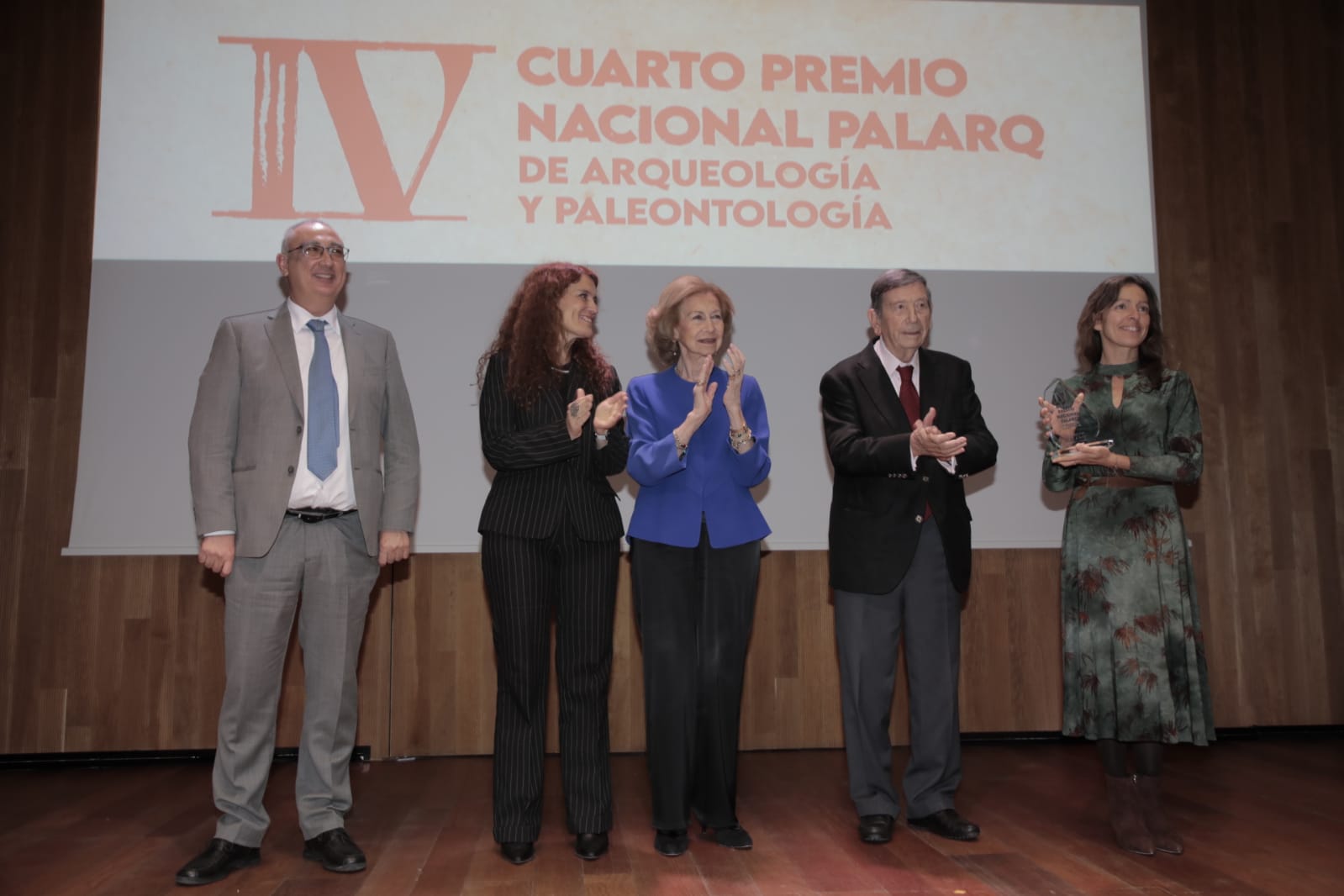
The event was attended by Her Majesty Queen Sofía, as well as various representatives from the scientific, academic, and cultural communities.
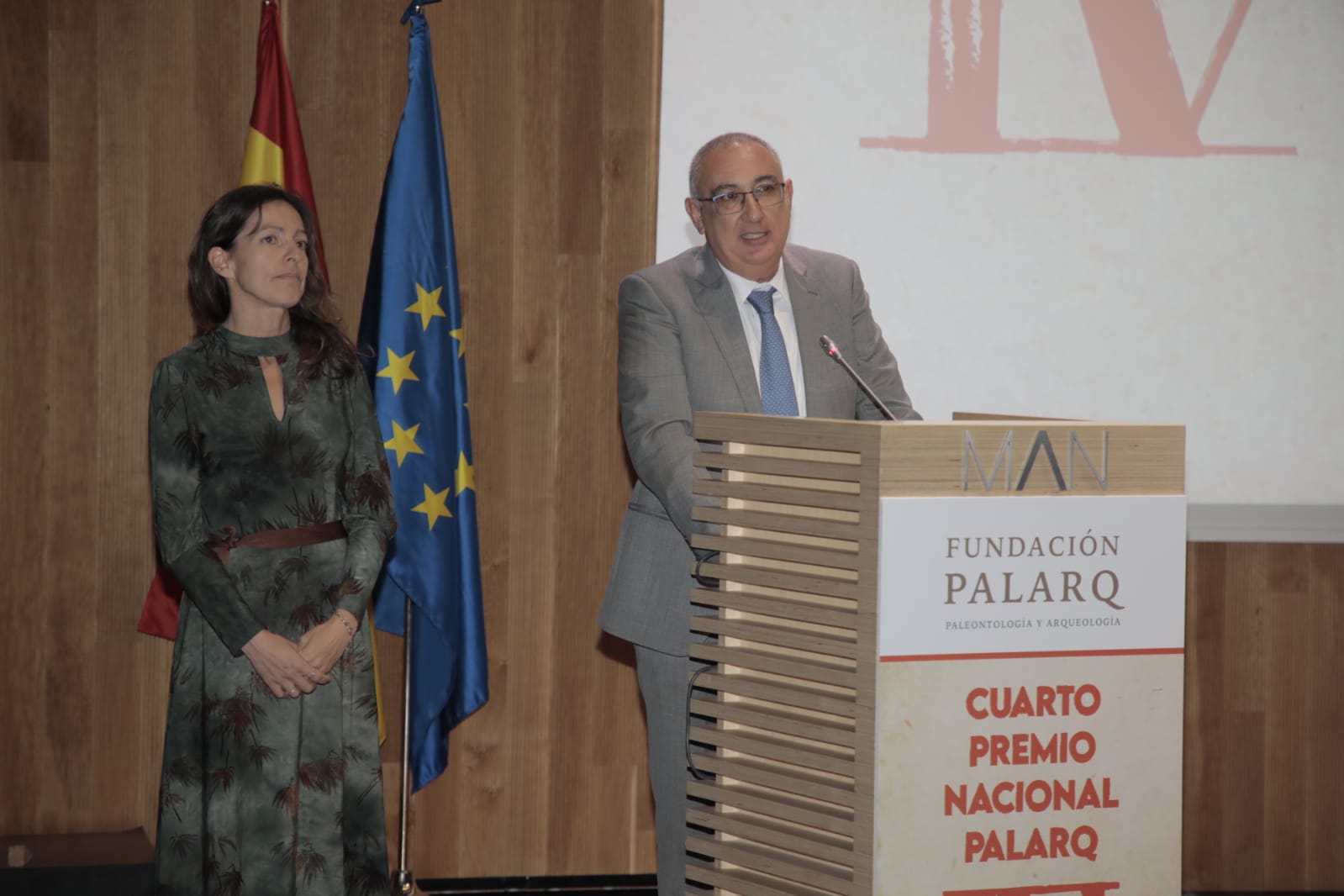
Madrid, December 4, 2025. The project “Around Time: Interdisciplinary Archaeological Research at the Neanderthal Sites of El Salt and Abric del Pastor,” led by Dr. Carolina Mallol Duque and Dr. Cristo Hernández Gómez (University of La Laguna), has been recognized with the IV Palarq National Award for Archaeology and Paleontology, the highest private award in Spain dedicated to these disciplines.
The Palarq Foundation announced the decision during a gala held this afternoon at the National Archaeological Museum (MAN), which was attended by representatives from the scientific, academic, and cultural communities. The event was attended by Her Majesty Queen Sofía, who presented the award, as well as Dr. Eva Ortega-Paíno from the General Secretariat for Research of the Ministry of Science, Innovation, and Universities, members of the award jury, and various prominent figures from the field of research and scientific dissemination.
The jury consisted of Mr. Luis Monreal, Director General of the Aga Khan Foundation (Geneva); Dr. Eva-Maria Geigl, Centre National de la Recherche Scientifique (CNRS); Dr. Dirce Marzoli, German Archaeological Institute; Dr. Erika Pastrana, Vice President of Nature Research; Mr. Pepe Serra, Director of the Museu Nacional d’Art de Catalunya (MNAC); and Mr. Iñaki Gabilondo, journalist; has recognized the methodological excellence, interdisciplinary approach, and international reach of the project, which for almost four decades has been researching the Neanderthal sites of El Salt and Abric del Pastor (Alcoy, Alicante), key to understanding the Middle Paleolithic and the processes that led to the eventual disappearance of the Neanderthals.
“This project is an exemplary combination of scientific rigor, technological innovation, and a commitment to dissemination that we want to promote at the Foundation,” said Antonio Gallardo Ballart, president of the Palarq Foundation. “Recognizing research into our origins also means investing in a more conscious future that is connected to science.”
The “Around Time” project applies a high-resolution scientific approach based on excavations and interdisciplinary analyses of archaeological remains and sediments. Using geoarchaeological techniques and molecular studies—such as the preservation of lipids, proteins, or fossil DNA in sediment—the team analyzes anthropogenic hearths and exceptionally well-preserved human occupation deposits, integrating methodologies that allow environmental, technological, and biological data to be connected in order to interpret Neanderthal behavior.
In addition, the combination of advanced dating techniques (thermoluminescence, optically stimulated luminescence, ESR, uranium series) and machine learning tools using convolutional neural networks (CNN) allows for highly accurate reconstruction of the daily life, adaptability, and resilience of Neanderthals in the face of climate change. Thanks to this methodology, the research overcomes the challenge of the archaeological palimpsest, offering an unprecedented insight into the variability of Neanderthal behavior and their ability to respond to environmental changes.
At the same time, on a social level, the team also carries out outstanding work in the field of heritage dissemination and education, with open days, school visits, and educational materials that bring these findings closer to the general public.
The Secretary General for Research, Dr. Eva Ortega-Paíno, highlights: “Foundations play an important role within the research ecosystem in Spain, and the Palarq Foundation is a living example of this. At the Ministry of Science, Innovation, and Universities, we are committed to promoting and recognizing them, which is why we wanted to be present at this event, which is a recognition not only of the award winners, but also of the work of the Foundation.”
With this distinction, the Palarq National Award, worth €80,000, reaffirms its role as the highest recognition of Spanish archaeology and paleontology, highlighting projects that combine scientific excellence, social impact, and the ability to transfer knowledge to the public. The fourth edition of the award has highlighted the exceptional level of research in Spain, represented by the six finalist projects: La Draga (Banyoles, Girona); The Mega-Site of Valencina (Seville); Arqueomallornauta (Mallorca); The Cave of the Bats of Albuñol (Granada); Iberian Coinage (MIB); and the winning project, Around Time (Alicante). All of them share the desire to bring knowledge of the past closer to society and to place Spanish science on the international map of human heritage research.
In this way, the Palarq Foundation consolidates its commitment to science, culture, and dissemination, supporting the work of Spanish teams conducting research around the world and promoting dialogue between research, technology, and society. This spirit, which unites the past and the future, makes the Palarq Award a benchmark for present and future generations of scientists and disseminators.